Do You Need a UK Driving Licence to Drive a Forklift?
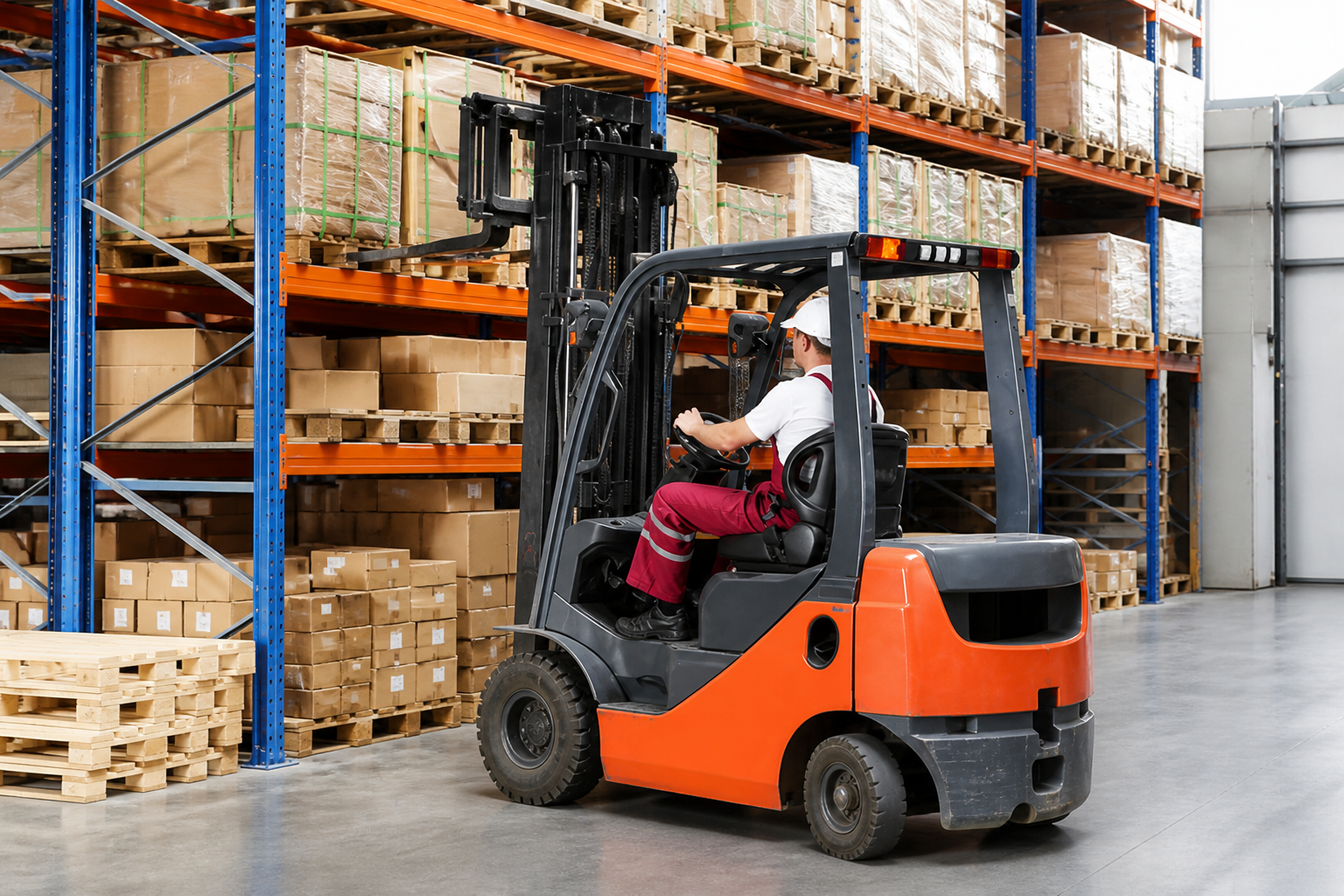
You do not need a standard UK driving licence to operate a forklift in private yards or warehouses. Start beginner FLT training Birmingham candidates need with our 3–5 day novice course.
Do you need a driving licence to drive a forklift in the UK?
Employers often ask whether you need a UK driving licence to drive a forklift. For operation on private premises — warehouses, factories and private yards — you do not need a standard DVLA car or LGV licence. What you need is adequate FLT training and employer authorisation to operate, in line with HSE ACOP L117.
Public highway use is different. If a truck is driven on a public road, road traffic law and insurance requirements may apply, and a suitable driving licence can be required. Most day-to-day warehouse roles never leave private land, which is why beginners looking for forklift training near Birmingham can start without holding a car licence.
What employers will ask for instead
Even without a car licence, responsible employers will expect:
- Successful completion of accredited operator training for the truck type
- Site induction and familiarisation on local rules
- Written authorisation to operate specific machines
- Ongoing refresher or conversion training as your role develops
Age and medical fitness policies vary by employer. Many sites prefer candidates aged 18+ and may ask about fitness to operate powered industrial trucks. Always check the job advert and company policy.
Step-by-step path: beginner forklift training in Birmingham
If you are new to lift trucks, follow this route into FLT training in Birmingham:
- Choose novice training — Our beginner / novice truck training course is the standard entry point for people with no forklift experience.
- Complete 3–5 days of training — Typical novice duration for three delegates is around 32.5 hours, combining theory and practical work (exact duration depends on numbers and progress).
- Pass theory and practical assessment — You cover controls, hydraulic operation, pallet handling, ramps, stacking and the operators’ safety code.
- Receive your certificate — Accredited documentation (for example ITSSAR) evidences basic training for employers.
- Get site familiarisation — Your employer must still brief you on their trucks, racking and traffic routes before unsupervised work.
- Plan your next skill — After workplace experience, add reach, conversion, Bendi or VNA training to widen job options.
That pathway is the clearest answer if you are searching for beginner forklift training in Birmingham and wondering whether a car licence is the blocker. It usually is not.
What the novice forklift course feels like
Expect classroom modules on stability, daily checks and safe systems of work, then supervised driving on a training truck. Instructors correct steering, load handling and judgement in tight spaces. Class sizes are deliberately small so you get enough seat time — something that matters more than any “licence” myth.
Tea, parking and a Birmingham West Midlands location make attendance straightforward for candidates across the city and surrounding towns. Weekend or weekday starts can be arranged depending on cohort demand.
Common myths to ignore
- “You must have a car licence first.” Not for private warehouse or yard operation.
- “A plastic card from years ago is enough forever.” Employers still need current competence and often a refresher every 3–5 years.
- “Online theory alone makes you legal.” Practical training and assessment remain essential.
Start novice forklift training in Birmingham
Ready to train without a car licence holding you back? Contact Forklift Pioneer Training to join the next novice cohort at Unit 8, Paper Mill Road, Birmingham, or ask about on-site beginner training for company groups. We will confirm dates, truck categories and what to bring on day one.
Warehouse work versus public roads
The driving-licence question splits into two legal worlds. Private land — warehouses, factories, yards behind a gate — is workplace law. HSE ACOP L117 and PUWER require adequate training and authorisation. They do not require a car or LGV licence.
Public highway use is road traffic law. If a forklift, telehandler or similar machine is driven on a public road, insurance, lighting, registration and a suitable driving licence can apply. Most Birmingham warehouse roles never leave the yard. If your job includes towing or moving trucks between sites on the highway, ask the employer before you assume a car licence is irrelevant.
Age, fitness and English
Providers and employers set their own policies. Many sites prefer operators aged 18+ and may ask about fitness to operate powered industrial trucks. You need enough English to follow safety instruction and written assessments. None of that is the same as holding a DVLA photocard.
Agency work can be stricter than permanent roles because the hirer wants portable evidence: accredited training on counterbalance, reach or PPT/LLOP, plus a recent refresher if your last course was years ago.
What to bring on day one of novice training
- Photo ID
- Safety boots (we will confirm PPE when you book)
- Details of any previous informal experience
- The truck type your employer uses, if you already have a job offer
You do not need a driving licence photocard for a standard warehouse novice course. You do need to complete theory and practical assessment — there is no “online only” shortcut that satisfies L117.
Cost varies with duration, truck type and whether you train at our Birmingham centre or on-site. We do not publish a single fee; the cost guide explains the factors. Call 0121 213 1174 or use the contact form.
Job adverts that mention a driving licence
Some Birmingham warehouse adverts still say “full UK driving licence required” even for indoor FLT roles. That is often a copy-paste from van-driver templates. Ask the employer whether the truck leaves private land. If it does not, accredited forklift training is the real requirement.
If the role mixes yard shunting on the highway with warehouse work, you may need both. Do not skip novice training because you already drive a car, and do not skip a car licence if the job genuinely uses public roads.
Forklift Pioneer Training will not pretend a car licence is a forklift certificate. We will tell you honestly whether novice, semi-experienced or refresher is the right course for the machines you described.
Forklift training and driving licence FAQs
Not for private premises such as warehouses, factories and private yards. You need adequate FLT training and employer authorisation, in line with HSE ACOP L117. A DVLA car licence is not required for that work.
Yes. Beginners can join our 3–5 day novice forklift training in Birmingham without holding a car or LGV licence.
If a truck is driven on a public road, road traffic law and insurance may apply, and a suitable driving licence can be required. Most warehouse roles never leave private land.
Accredited operator training for the truck type, site induction, written authorisation to operate, and ongoing refresher or conversion training as the role develops.
Book forklift training in Birmingham
Forklift Pioneer Training delivers ITSSAR accredited FLT courses at Unit 8, Paper Mill Road, Birmingham, and on-site across the UK.
- Novice forklift training in Birmingham
- Semi-experienced forklift training
- Forklift refresher course if you already hold a certificate